
An AI interview uses artificial intelligence to evaluate a candidate’s responses– either through video, text, or voice interactions. These interviews can be pre-recorded or conducted in real time, with AI analyzing speech, language, tone, and behavior to assess qualifications, skills, and fit. AI interviews help automate screening, reduce bias, accelerate decision-making, and improve consistency in the recruitment process, making them ideal for high-volume and remote hiring.
AI is already transforming the workplace—and hiring is no exception.
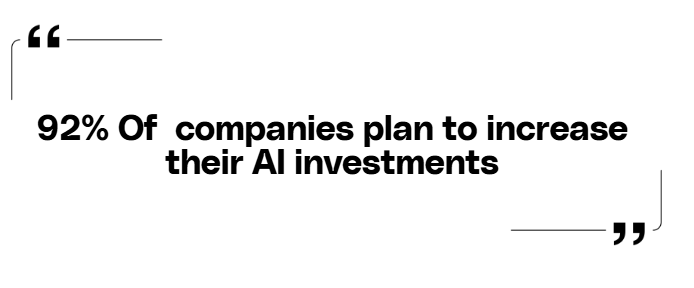
While nearly every company is investing in AI, few have successfully embedded it into their day-to-day operations. AI interviews offer a practical, high-impact entry point. Unlike broad, experimental AI applications, this is a focused use case that delivers immediate ROI while setting the stage for long-term transformation in talent acquisition.
“Capita… said it was using AI to cut recruitment from weeks to just hours.”
– Reuters, June 11
The shift is already happening. Companies like Capita, in partnership with Salesforce, are rolling out AI-driven hiring systems that dramatically speed up recruitment—from weeks to hours.
AI interviews are no longer futuristic—they’re here, and they’re reshaping how businesses hire.
Since hiring involves tight timelines, high risks, and significant costs, AI interviews offer a practical way to drive quick, measurable impact. From reducing time-to-hire to improving quality-of-hire, they help companies realize the benefits of AI without the complexity or risk of larger deployments.
AI Interviews are categories into two main types:
→ AI-Assisted Interviews
→ AI-Led Interviews
AI-assisted interviews are job interviews enhanced by artificial intelligence tools that support—rather than replace—human decision-making throughout the candidate evaluation process. These systems are designed to streamline interviews, improve objectivity, and boost efficiency without compromising the human touch that’s critical in hiring.
The process usually looks like this:
AI-led interviews are interviews that are completely run by artificial intelligence, with no human present in the conversation.
Here’s what that looks like:
→ You join an interview link or app.
→ An AI system asks you questions—these could be text-based or spoken aloud by a chatbot or digital avatar.
→ The AI analyzes your responses in real-time or after submission, looking at:
The system then generates a report or score that recruiters or hiring managers may use to decide your next step—or, in some cases, the AI itself may move you forward or reject you automatically.
Here’s a breakdown of how AI Interviews typically work:
The AI system starts by “reading” the job description provided by the recruiter or hiring manager. It uses natural language processing (NLP) to understand what the role needs:
From that job description, the AI extracts a list of must-have and nice-to-have skills. These skills could be technical (like “Python,” “SQL”) or soft (like “leadership” or “communication”).
This forms the baseline against which every candidate will be evaluated.
At this stage, the AI generates the interview questions::
This mix of static and personalized questions ensures both fairness and relevance.
When the candidate takes the AI interview (often recorded video or audio):
It’s like having a robotic interviewer that watches and listens—without human presence.
Once the interview is done, the AI reviews both the content of the candidate’s answers and the manner in which they were delivered—such as tone, pacing, and clarity—then interprets that data based on the job requirements.
Recruiters receive this structured output and can decide who to move forward—without having to watch every interview from start to finish.
→ Reduced resume screening time: Recruiters can save enormous amounts of time in resume screening using AI, as it takes days or even months to do it which delays the hiring process and makes it inconsistent.
→ Faster time to hire: With AI, companies have slashed average hiring timelines from around 44 days to as little as 11 days
→ 1000 / candidate: with AI companies using AI you can quickly reduce the cost per candidate which is the hiring costs [this refers to the amount that costs the recruiters or hiring managers to screen or analyze candidates.]
→ Bias mitigation: AI focuses on skills and keywords—not subconscious human biases—helping promote fairer evaluations and more diverse hiring
→ Instant feedback: Chatbots and systems can instantly acknowledge applications or pre-screen outcomes, improving communication and transparency
→ Flexibility in hiring: Candidates can record interviews anytime, anywhere—making the process more accessible and accommodating different time zones
→ Cost Saving: Organizations report saving up to 87% of recruiter screening time, cutting agency fees, and reducing vacancy-related losses.
→ Improved Quality of Hires: AI matches candidate skills and experience more accurately, leading to better hiring outcomes and reduced turnover.
→ Standardization and Consistency: Every candidate is scored using the same criteria—no variability from day-to-day recruiter moods or biases.
→ Scalability for Global Recruitment: Systems effortlessly handle thousands of applicants worldwide, making them ideal for high-volume or international hiring.
→ Enhancing Candidate Experience: Quicker scheduling and real-time updates lead to smoother, more respectful interactions—boosting satisfaction and completion rates.
→ Enhancing Employer Brand: A modern, responsive hiring process reflects well on your organization—attracting higher-quality applicants.
→ Better Experience for Recruiters and Hiring Managers: AI can help recruiters by automating repetitive tasks, reducing their administrative burden, and speeding up the screening process. This means hiring managers spend less time in the early stages of recruitment and can focus on higher-value decisions, such as interviews or final evaluations. The entire process becomes more streamlined, enabling quicker and more accurate hiring decisions.
AI interviews are no longer just futuristic concepts—they’re already reshaping how companies assess talent across every stage of the hiring funnel. But the way AI is used isn’t one-size-fits-all. Depending on the industry, role, and hiring objective, AI interviews adapt to evaluate different skills and simulate real on-the-job scenarios.
In modern engineering workflows, developers aren’t coding in isolation—they’re working with AI. That’s why today’s most forward-thinking companies are using AI interviews that reflect this reality.
For roles that hinge on communication—like sales, business development, and customer success—AI interviews go beyond scripted answers.
Screening large pools of fresh graduates is tough, but AI makes it scalable while maintaining depth. These systems don’t just screen resumes and schedule interviews—they also analyze video responses to assess communication skills, presentation style, learning potential, and adaptability. AI helps reduce hiring bias by focusing on actual performance rather than just credentials or backgrounds, while also measuring cognitive ability and cultural fit.
For call centers and service operations, the balance between rapid hiring and candidate quality is essential. AI-powered chatbots and voice assistants help quickly assess candidates’ language skills, clarity of speech, and ability to respond effectively under pressure.
Even executive hiring benefits from AI’s insights. By analyzing video interviews, written answers, and voice tone, AI evaluates leadership qualities like decision-making, strategic thinking, and influence. It helps synthesize feedback across multiple interviewers and uses psychometric tools to identify candidates whose leadership style and emotional intelligence align well with the organization’s culture and values.
When it comes to AI interviews, not all bots are built the same. Most AI-driven interview tools today rely on static question-and-response flows—meaning they ask a list of pre-set questions and wait passively for answers. Candidates quickly figure out how to “game” these systems by preparing rehearsed answers, using multiple screens, or even getting external help. The end result? Shallow evaluations, poor signal, and wasted time.
Unlike traditional bots, NIVO leads truly conversational interviews—especially for technical and coding roles. It doesn’t just ask a question and move on; it listens, interprets, and adapts in real time. If a candidate writes incomplete code or skips a crucial step, Nivo will follow up, ask clarifying questions, or challenge assumptions—just like a human would in a live technical round.
Here’s what makes NIVO stand out:
NIVO conducts interviews that feel like real dialogue. It probes deeper based on candidate responses, identifies when a concept hasn’t been explained clearly, and tailors its follow-ups to uncover actual skill depth—far beyond what static assessments can achieve.
Whether it’s a software engineer solving an algorithm or a product candidate explaining tradeoffs, NIVO evaluates with a level of depth comparable to human interviewers. It understands not only what the candidate did but why—and flags both strengths and concerns with real nuance.
Nivo’s multi-layered fraud detection doesn’t stop at plagiarism checks. It analyzes coding patterns, tracks tab switches and focus changes, and even evaluates how naturally a candidate engages with follow-up questions. This makes it extremely difficult to bluff your way through the interview.
Because NIVO can run interviews around the clock, candidates can take them on their own schedule, and hiring teams can evaluate results when it suits them. This removes bottlenecks, slashes time-to-hire, and lets teams focus only on the top performers.
Most AI interview platforms are built to be simple and intuitive. Recruiters can use them without needing technical expertise, and they often integrate easily with existing systems.
While AI can’t fully replace human touch, it can be designed to reflect your brand’s personality — including tone, language and communication style. By handling repetitive tasks and maintaining consistency, AI allows recruiters to focus more on meaningful conversations and less on administrative tasks.
Some AI tools can detect tone, facial expression, and language patterns to better understand candidate behavior. AI systems don’t carry apparent biases and aren’t judgemental at any stage, which many candidates find refreshing.
These systems track how consistently candidates respond, how engaged they are and other behavioral signals. This makes it difficult to cheat or give rehearsed answers.
While helpful for processing large applicant volumes, AI interviews also work well in smaller hiring processes, where accuracy and fairness are still important.
AI systems that are carefully built and monitored can help reduce bias by focusing on objective factors like skills and qualifications, rather than names or backgrounds.
AI note taking tools use artificial intelligence and advanced speech recognition to automatically record, transcribe, and organize notes during or after the interviews.
These tools can capture interviews directly or process uploaded audio or video files, then transcribe the conversation, summarize key points, and structure the content into organized notes. The output can be shared with hiring teams and integrated into ATS or (CRM) platforms.
This AI tool is designed to help create and maintain job posts that are consistent, compliant, and aligned with a company’s brand. It checks both live and draft job posts to ensure they include up-to-date information, meet compliance requirements, and are engaging. The AI learns from hiring manager discussions and interview feedback to suggest custom updates to job posts. It works interactively with users, adapting based on their input to avoid generic recommendations. Overall, it continuously monitors job posts to keep them accurate and on-point.
An AI-powered career site helps brands enhance their job portals by offering candidates a personalized job search experience. Using AI, the site recommends jobs that best match each candidate’s skills, interests, and location, making it easier for candidates to find relevant opportunities quickly.
AI panel feedback tools are designed to simplify and improve how hiring teams collect, analyze, and synthesize feedback from panel interviews. By leveraging artificial intelligence, these tools transcribe conversations, extract meaningful insights, score candidates objectively, and generate structured reports — helping teams make faster, fairer hiring decisions.
AI interviews are ideal for teams hiring at scale, across geographies, or in multiple languages. If you’re looking to reduce recruiter workload, improve candidate experience, and ensure consistent, unbiased evaluation, AI can help. They’re especially useful for remote, high-volume, or multilingual hiring needs.
If that sounds like your team, it’s worth exploring further.
Though AI excels at speed, consistency and bias mitigation, it cannot fully grasp interpersonal chemistry or deeper cultural fit — ultimately, human insights remain essential.
AI analyzes interviews by processing candidate’s verbal and non-verbal responses using natural language processing (NLP), speech analysis, and sometimes computer vision. It evaluates what is said (content, keywords, coherence), how it’s said (tone, pacing, confidence), and, in video interviews, visual cues like eye contact or facial expressions to assess skills, fit, and potential performance.
Yes — automated systems reliably transcribe in multiple languages and extract insights.
Yes—AI generates tailored, structured, role-specific questions based on job descriptions.
AI is a really helpful tool for HR teams. It helps speed things up, find better candidates, and even make the hiring process feel more personalized. But it’s not meant to replace people. The best results come when AI is used alongside human judgment—where people still make the important decisions, keep things fair, and make sure everything stays transparent and respectful.
AI-powered interview tools use Natural Language Processing (NLP) to analyze job descriptions and candidate profiles, identifying key skills and requirements. Based on this analysis, they generate role-relevant technical, behavioral, and situational questions tailored to the job. Machine Learning (ML) helps these tools improve over time by learning from previous interviews and recruiter feedback. Recruiters can customize question tone, complexity, and focus based on seniority and job type. To ensure fairness, AI standardizes interview questions, reducing bias and maintaining consistency across candidates. Some platforms also adapt in real time, adjusting questions based on candidate responses.
AI interview tools can attempt to detect lies by analyzing verbal and non-verbal cues such as facial expressions, voice tone, body language, and language patterns. Some systems use cameras and microphones to track micro expressions, vocal stress, and speech inconsistencies in real time.
AI-powered interview tools evaluate a broad range of skills across multiple categories: Personality & Cultural Fit: Identifies traits like openness and conscientiousness to evaluate alignment with company values and culture. Technical & Cognitive Skills: Includes coding, data analysis, software proficiency, problem-solving, and critical thinking. Communication Skills: Covers verbal clarity, tone, fluency, and non-verbal cues such as facial expressions, eye contact, and body language. Behavioral & Interpersonal Skills: Assesses emotional intelligence, empathy, teamwork, collaboration, and leadership potential.
.png)

.svg)

.svg)


%201.svg)
.svg)