
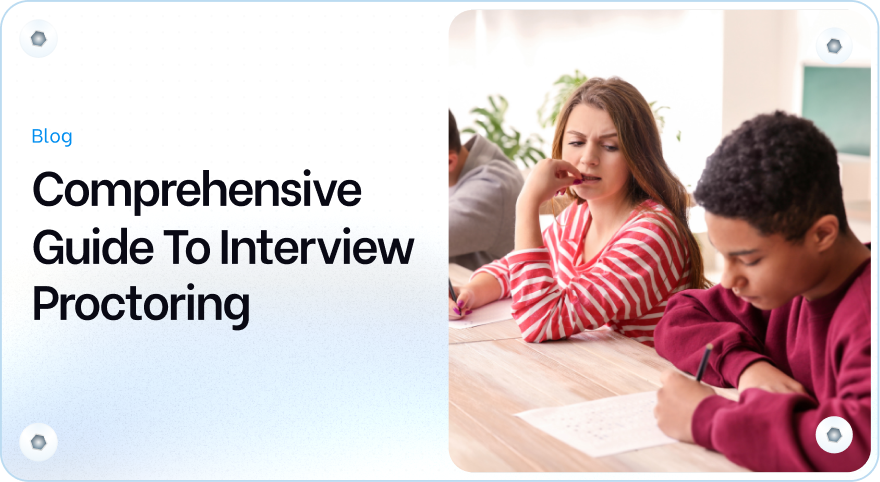
As technology and AI advance, so do the creative ways candidates try to game the system. Tools like AI interview copilots now offer real-time suggested answers to interview questions, making it easier for candidates to manipulate the process. With the rise of such tools, it has become more crucial than ever to enhance interview proctoring methods and ensure fairness in hiring.
But what exactly is interview proctoring, and why does it matter so much in today’s hiring landscape?
Video interviews surged in popularity during the COVID-19 pandemic, transforming the way businesses approached hiring. Roles that once took months to fill were being concluded in as little as one to two weeks. Candidates, too, found new flexibility, attending multiple interviews—sometimes even on the same day—without ever leaving home.
But with this new found convenience came challenges. The shift to virtual interviews opened doors for proxy candidates and other forms of misconduct. Businesses soon realised that while virtual interviews offered speed and scalability, they also introduced the risks that could compromise the integrity of the hiring process.
Over the past four years, FloCareer’s interviewing platform has flagged over 34,000 candidates for potential fraud—a testament to how pervasive this issue has became in the post-pandemic hiring landscape. Despite the challenges, video interviews remain a cornerstone of modern hiring, with most employers continuing to use them well after the pandemic.
So, what exactly is interview proctoring? At its core, interview proctoring is about ensuring authenticity and preventing misconduct during virtual interviews. Powered by cutting-edge technologies like AI-driven facial recognition, behavior analysis, and voice verification, today’s proctoring tools are designed to uphold the integrity of remote hiring processes.
So, with proctoring tools now essential, how are organisations around the world adapting?
1. Integration of Artificial Intelligence (AI)
AI is increasingly central to interview proctoring, providing real-time monitoring and analysis of candidate behavior. In the United States, AI tools are widely adopted, focusing on identity verification and behavioral analytics to ensure a fair process. Conversely, in regions like India, AI integration is gaining momentum as companies seek scalable solutions for large candidate pools, enhancing efficiency and security in recruitment.
2. Adoption of Remote Proctoring Tools
Remote proctoring tools have become essential for conducting interviews across various sectors. The European Union has seen significant adoption, particularly due to the need for compliance with GDPR regulations, which emphasize data protection during remote assessments. Meanwhile, in Asia-Pacific, countries like India are rapidly adopting these tools to facilitate a growing remote workforce, making the hiring process more accessible.
3. Emphasis on Data Privacy and Ethical Considerations
Data privacy is a critical concern globally, especially in the EU where GDPR mandates strict regulations on data handling and candidate privacy during proctoring. Organizations must ensure compliance to avoid hefty fines. In contrast, while the US also emphasizes data privacy, the regulatory landscape is less stringent compared to the EU, leading to varied practices in ethical considerations around candidate monitoring.
4. Standardization and Compliance
Standardization of proctoring practices is essential for maintaining integrity across interviews. The EU leads in this area with established guidelines that organizations must follow to ensure compliance with data protection laws during remote assessments. In contrast, the US market is more fragmented, with companies developing their own standards based on industry needs rather than adhering to a unified regulatory framework.
5. Market Growth and Technological Advancements
The interview proctoring market is experiencing robust growth globally, fueled by technological advancements such as AI and machine learning. The US market is at the forefront of this growth, with significant investments in AI-driven recruitment technologies. Meanwhile, India is witnessing rapid technological advancements as startups innovate in this space, aiming to capture a larger share of the global market through cost-effective solutions.
Let’s be real: remote hiring comes with its fair share of challenges. Ever dealt with a candidate who seemed just a little too perfect? Maybe their resume didn’t quite match up, or their interview behavior raised a red flag.
With remote work and online hiring becoming the new norm, proctoring has become the first line of defense against fraud. Here’s why it matters:
AI tools like facial recognition can verify a candidate’s identity in real time, ensuring that the person on the other side of the screen is who they claim to be. These systems also monitor behavior, flagging anything suspicious to ensure you’re hiring genuine talent.
Fraudulent practices have gotten creative, from proxy interviews (where someone else pretends to be the candidate) to deepfake avatars and AI-generated resumes. Proctoring tools combat these by using biometric authentication, document verification, and real-time monitoring to catch fraud before it impacts your business.
Let’s face it: remote hiring makes it easier for bad actors to slip through the cracks. Proctoring tools level the playing field by implementing secure environments, monitoring behavior, and ensuring everyone follows the same rules. Proctoring tools often record audio and video during interviews, allowing for later review if any fraudulent behavior is suspected. By enforcing secure browsing environments and restricting access to unauthorized applications during assessments, proctoring tools help ensure that candidates cannot cheat or manipulate their responses during interviews.
Got a ton of candidates to screen? No problem. Automated proctoring solutions can handle high volumes while maintaining consistency and fairness. They even allow candidates to complete assessments on their own schedules, making the process more flexible and inclusive.
With the growing need for fairness and security in remote hiring, modern interview proctoring relies heavily on cutting-edge technologies. These innovations not only detect and prevent fraudulent activities but also ensure a smooth and trustworthy process for candidates and hiring teams alike.
To better understand how proctoring detects and flags proxy and suspicious behavior, let’s look at the specific technology used behind it.
With these features in mind, implementing proctoring systems across different regions requires careful planning. Let’s explore the best practices for multi-regional deployment.
The first and foremost step in implementing proctoring across multiple regions is to understand the local laws and regulations related to data privacy and protection.
For example, the General Data Protection Regulation (GDPR) in the European Union governs the collection, storage, and processing of personal data. Similarly, in the United States, laws like the California Consumer Privacy Act (CCPA) impose specific requirements on data collection and privacy practices.
Cultural differences can also significantly influence candidates’ perceptions of privacy and monitoring. Therefore, it is crucial to obtain explicit consent from candidates and maintain transparency about how their data is collected, why it is needed, and how it will be used during the proctoring process.
Having a consistent set of rules makes life easier. Everyone gets the same fair treatment, no matter where they are.
Here’s what to keep in mind:
Ensure IT teams are proficient in integrating proctoring tools with existing systems, maintaining compatibility, and optimizing performance across various platforms. Develop IT teams’ ability to promptly address technical issues that may arise during proctored interviews, minimizing disruptions and ensuring a smooth candidate experience.
Additionally, train your team on regional data protection laws and regulations, such as the General Data Protection Regulation (GDPR) in the EU, to ensure compliance and avoid legal pitfalls.
Integrating proctoring tools with your existing systems can feel daunting, but it doesn’t have to be. Here’s how to keep it simple:
Monitoring can make people nervous—no one likes the feeling of being watched. To build trust, be upfront.
Tell candidates why monitoring is necessary and how their data will be handled. Some tools even require candidates to read and accept terms before starting the interview. This transparency not only fosters trust but also reduces anxiety.
Nobody gets it perfect the first time. Collect feedback from candidates and recruiters to fine-tune your process. AI-powered tools can help automate this, giving you insights on what’s working and where you can improve.
Now that we’ve delved into the technologies powering modern proctoring systems, it’s time to look at the bigger picture. How do these innovations translate into tangible benefits for employers and job seekers? And what challenges come with implementing such systems? Let’s explore the practical impact of interview proctoring on hiring processes and outcomes.
Proctored interviews can bring significant advantages to both employers and job seekers. Let’s break it down:
For employers, proctored interviews provide a straightforward way to ensure that the person they’re interviewing is actually the person they’re hiring. No impersonations, no surprises! For candidates, this means they’re assessed fairly, based on their true abilities.
Thanks to modern tech like AI-based facial recognition, biometric verification, and environmental scanning, proctored interviews can easily spot fraudulent activity. It’s like a built-in fraud detector, catching impostors or unusual behavior before they slip through.
One of the best things about proctored interviews is that they make it possible to hire from anywhere. No more travel costs or waiting for candidates to be available in the same time zone. Candidates can interview from the comfort of their own homes, no matter where they are.
Proctored interviews are a huge time-saver for employers. By automating the interview process, things like travel expenses, accommodations, and venue arrangements become a thing of the past. Plus, automated scoring and reporting make decision-making faster and more data-driven, allowing recruiters to make quicker, more informed choices. Candidates also benefit from faster feedback and a streamlined process.
Proctored interviews help level the playing field. Every candidate is evaluated under the same conditions, using consistent criteria. This reduces biases that may arise in traditional interviews and ensures candidates are judged based on their skills, not subjective factors. For job seekers, this means a fair shot at showcasing their talents.
Now, let’s look at some of the challenges that come with implementing proctored interviews:
Technical difficulties are a common challenge in proctored interviews, and they can cause delays and frustration for both candidates and recruiters. When it’s hard to hear or see the candidate clearly, it becomes much harder to detect signs of cheating or proxy interviewing. This can make the whole process a bit nerve-wracking for both sides.
Proctoring can feel intrusive to some candidates, who might be uncomfortable with constant surveillance or the use of webcams and screen recording. It’s important to communicate transparently with candidates about what to expect, to ease their concerns.
Cultural attitudes toward monitoring and privacy vary widely across the globe, influencing how proctoring is perceived and accepted.
For instance, in countries like the U.S., remote assessments and monitoring are generally seen as a practical solution for scalability and convenience. On the other hand, in regions like Germany, cultural emphasis on personal privacy—coupled with stringent laws like GDPR—makes candidates more cautious about proctoring technologies.
In some Asian cultures, there’s a strong focus on respect and trust in professional interactions, which may lead to discomfort with overly intrusive monitoring systems. Meanwhile, candidates in other regions may view proctoring as a sign of fairness and integrity, appreciating the effort to ensure equal treatment for all.
The upfront costs of proctoring tools, as well as ongoing expenses for subscriptions and training, can be a barrier for small businesses. While the long-term savings are clear, the initial investment can be daunting.
When implementing proctored interviews, protecting candidate privacy and mitigating bias are paramount.
Data security is essential when handling sensitive candidate information. Implementing strong encryption ensures that personal data is safe from unauthorized access, both during and after the interview process.
It’s important to communicate clearly with candidates about what data will be collected and how it will be used. Be transparent about the monitoring process, from video recording to AI-based behavior analysis, to help reduce anxiety and foster a sense of security.
AI systems should be trained on diverse datasets to ensure they don’t favor one demographic over another. Regular audits of AI tools help identify and correct any biases, ensuring fair and equitable treatment for all candidates.
Human proctors should be trained to recognize and mitigate unconscious bias during interviews. Clear, standardized evaluation criteria help reduce subjectivity and ensure fair judgments based on skills and performance, rather than personal characteristics.
As the hiring landscape evolves, interview proctoring is poised to play a pivotal role in shaping the future of recruitment. From combatting fraud to ensuring fairness across borders, proctoring technologies are no longer just a convenience—they’re a necessity. But what lies ahead? With rapid advancements in artificial intelligence and global hiring trends, the future promises exciting possibilities and new challenges. Let’s explore the trends and innovations redefining proctoring as we know it.
From AI-driven insights to real-time decision-making, these are some of the most exciting innovations redefining proctoring systems
AI-powered behavioral analysis: Interview Proctoring solutions are using AI to monitor candidate behavior in real time. This includes analyzing facial expressions, eye movements, and even voice modulations to detect potential signs of dishonesty or cheating.
Machine learning models: These models learn from each interview and continuously improve their ability to detect suspicious behaviors. Over time, the system becomes more efficient at spotting anomalies, ensuring greater accuracy in the interview process.
Real-time data processing: Recruiters now have access to immediate insights into candidate performance. If something seems off during the interview—like an unexpected pause or strange background noises—the system can flag it, enabling quicker decisions.
Biometric verification: Facial recognition and voice biometrics are now common in proctored interviews, ensuring that the candidate in front of the camera is the same person who registered for the interview.
As organizations expand across borders, proctoring technology must adapt to the diverse needs of a global workforce. Here’s how proctoring is evolving to meet those challenges:
Interview proctoring is evolving to meet the challenges of a global workforce by balancing cultural sensitivity and legal compliance. Proctoring systems are increasingly designed to accommodate diverse norms and expectations, ensuring candidates feel respected and understood. At the same time, they are built to comply with varied privacy laws ( GDPR and CCPA as mentioned before ) ensuring robust data protection across regions. By tailoring solutions to regional needs and adhering to international standards, proctoring technology is becoming more inclusive, trustworthy, and adaptable for cross-border recruitment.
As companies grow globally, their recruitment needs become more complex. Proctoring tools must be scalable to accommodate this growth. Many proctoring tools now operate on cloud-based platforms, which allow companies to scale their recruitment efforts seamlessly across different regions without losing quality or efficiency. They should integrate with applicant tracking systems (ATS) and other HR software to streamline the process and ensure data flows smoothly.
Proctoring systems should employ AI algorithms that are designed to minimize bias. Regular audits can help ensure these systems don’t inadvertently favor certain groups of candidates based on race, gender, or cultural background. Clear communication about monitoring methods helps candidates feel more comfortable and ensures the process is perceived as fair. Transparency is key to building trust.
Organizations should actively gather feedback from candidates about their experiences with proctored interviews. This can help refine both the technology and the process to ensure they remain relevant across different cultures and regions.
Proctoring policies should be regularly updated based on feedback and evolving legal standards. This ensures that the process stays current and effective in a rapidly changing world.
The recruitment process is evolving rapidly, and interview proctoring is at the forefront of this change. Here’s how organizations can future-proof their recruitment efforts:
Choose scalable solutions: Proctoring tools that can handle varying volumes of candidates will help you manage your hiring needs, both now and in the future. Cloud-based platforms offer the scalability and flexibility to accommodate global recruitment.
Support a variety of assessments: Look for proctoring solutions that can be customized to suit different roles and industries. This ensures that the technology aligns with your specific recruitment requirements.
Stay up-to-date with data protection laws: Familiarize yourself with the latest data protection regulations in your regions of operation (GDPR, CCPA, etc.) to ensure compliance.
Offer training for HR personnel: Equip your HR team with the skills they need to use proctoring tools effectively. This includes understanding how to interpret results, troubleshoot issues, and make the most of the technology.
Leverage AI-driven insights: AI can help you uncover deeper insights into candidate behavior and performance. Use AI to identify patterns and anomalies that may not be immediately obvious through traditional evaluation methods.
Mitigate unconscious bias: Implement AI solutions that promote fairness and help eliminate bias from the hiring process. Regular audits are essential to ensure that the algorithms remain unbiased.
Choose the right technology partners: When selecting proctoring providers, look for those with a proven track record of delivering secure, compliant, affordable and innovative solutions. Establish partnerships with vendors that offer ongoing support and updates to keep your system future-proof.
By following these steps, you can build a recruitment process that is not only efficient and cost-effective but also resilient and compliant in the face of evolving technological and legal challenges.
As the use of proctoring continues to evolve, several trends are expected to influence the future of recruitment technology:
AI-Powered Personalization: Interview proctoring systems will become more personalized, using AI to adapt to individual candidates’ behaviors, ensuring more accurate assessments.
Ethical Technology Debates: As proctoring technology becomes more widespread, ethical debates surrounding privacy, surveillance, and bias will intensify. Companies will need to navigate these challenges to ensure they uphold fair and transparent hiring practices.
Adoption in New Industries: Proctoring solutions will extend beyond traditional industries, such as IT and education, into new sectors like healthcare, finance, and even creative fields. These industries will demand tailored proctoring solutions that account for their specific hiring needs.
The future of recruitment is clear: it’s digital, data driven and increasingly global. Interview proctoring plays a crucial role in this transformation, offering employers a secure, fair, and efficient way to assess candidates. By staying ahead of technological advancements, ensuring compliance with privacy laws, and continuously improving your processes, you can build a recruitment system that is not only effective today but also future-ready.
As organizations increasingly rely on remote assessments and interviews, proctoring plays a crucial role in enhancing the security and integrity of the assessment process and facilitates global reach and helps businesses make data-driven decisions.
Interview proctoring software operates through a combination of advanced technologies designed to monitor candidates during online assessments such as: identity verification, real-time monitoring, behavior analysis, automated reporting, and integration with assessment platforms.
Yes, interview proctoring is legal but must comply with data privacy laws like GDPR in the EU and CCPA in the US. These regulations require obtaining candidate consent, ensuring data transparency, minimizing data collection, and implementing robust security measures. Businesses must inform candidates about the purpose of data collection, provide options to access or delete data, and conduct regular compliance audits to adapt to evolving regulations.
Companies can implement interview proctoring without invading a candidate’s privacy by obtaining explicit consent from the candidate before proceeding with proctored interview, and being transparent about how the data will be collected and processed. Limit access to proctoring data to authorized personnel only. Ensure that data is not used for purposes beyond what candidates have consented to, such as sharing with third parties without explicit permission.
.png)

.svg)

.svg)


%201.svg)
.svg)